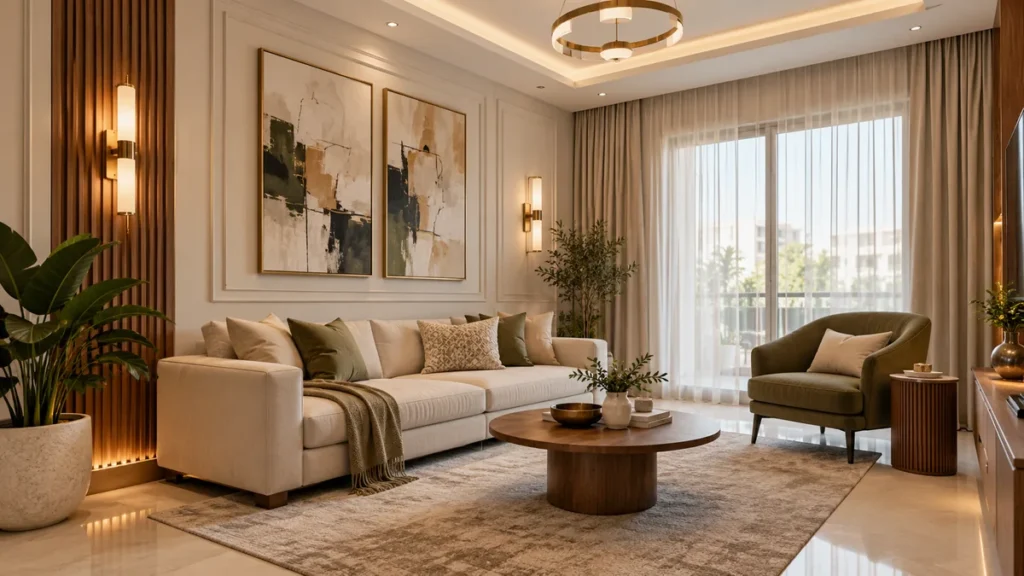
A small living room has a lot to do. It might be where the family watches television, children finish homework and guests sit for tea. When every corner has a purpose, adding more furniture can make the room harder to use. A better starting point is to decide what needs to stay and where people need to walk.
These small living room interior design ideas focus on practical changes you can make without rebuilding the room. Whether you are comparing furniture at Furniture Hub or working with pieces you already own, the aim is the same: comfortable seating, useful storage and enough space to move through your home.
What Makes a Small Living Room Work?
A small living room works best when the furniture suits its dimensions, doorways stay clear and everyday belongings have a place. Start with the seating layout, then choose storage, lighting and a few decorative details. Make each new purchase solve a specific problem before adding it to the room.
You do not have to keep every surface empty or choose only white furniture. A room can feel personal and welcoming while still being easy to clean, walk through and use.
Plan Around Doors, Windows and Daily Movement
Measure the room and draw a simple outline showing door openings, windows, sockets and any fixed features. Include the route people take from the entrance to the next room or balcony. This route should guide the layout before you decide where a sofa looks most attractive.
Mark the footprint of large pieces on the floor with removable tape. Open cabinet doors, pull out a chair and check whether someone can pass while another person is seated. If your household uses a walker or wheelchair, test the layout around those needs rather than relying on a generic spacing suggestion.
A Starting Layout for a 10-by-12-Foot Room
For an illustrative 10-by-12-foot room, you could begin with one compact sofa along a suitable wall, a shallow TV unit opposite and one movable chair near the seating area. Try a small table only after checking the walking route. This is a starting arrangement, not a guarantee that those pieces will fit every room of that size.
A door in the middle of the wall, a balcony entrance or a deep built-in cupboard can change the plan. Measure the actual furniture and test its placement before ordering.
Choose Seating for Everyday Use
A full matching sofa set is not essential in a compact family lounge. One comfortable sofa and a separate chair may serve the household better than two large sofas squeezed together. Think about the number of people who sit there each evening, then plan occasional guest seating around that.
Look at overall width and depth, including the arms and back. A sofa labelled “three-seater” can occupy very different amounts of floor space depending on its design. When comparing sofa sets for your living room, keep your room measurements beside you and shortlist by size before choosing upholstery.
When an L-Shaped Sofa Makes Sense
An L-shaped sofa may work when there is a clear corner and the chaise does not interrupt a doorway. It is less useful if its long section blocks the route to the window or makes the room difficult to rearrange.
Confirm the chaise position with a labelled photograph or sketch. If the room has several doors, separate seating pieces may give you more options.
Compare Layouts Before Buying Furniture
Use the room’s main constraint to narrow your choices. You can then compare the actual dimensions of the pieces that interest you.
| Room situation | Arrangement to try | Detail to check |
|---|---|---|
| Long, narrow lounge | Sofa along a long wall with a shallow unit opposite | The main walking route stays usable |
| Small square room | Compact sofa and one chair around a small table | Doors can open without hitting furniture |
| Room with a balcony | Seating positioned away from the balcony approach | Curtains and balcony access remain clear |
| Shared living and dining area | A defined seating zone beside a compact dining area | Dining chairs can be pulled out comfortably |
| Family room with toys or books | Seating paired with one useful closed cabinet | Stored items can be reached without moving the sofa |
Take a photo of each trial arrangement. Comparing two layouts side by side can make it easier to notice an awkward corner or a piece of furniture that is doing very little for the room.
Use Colour to Connect the Room
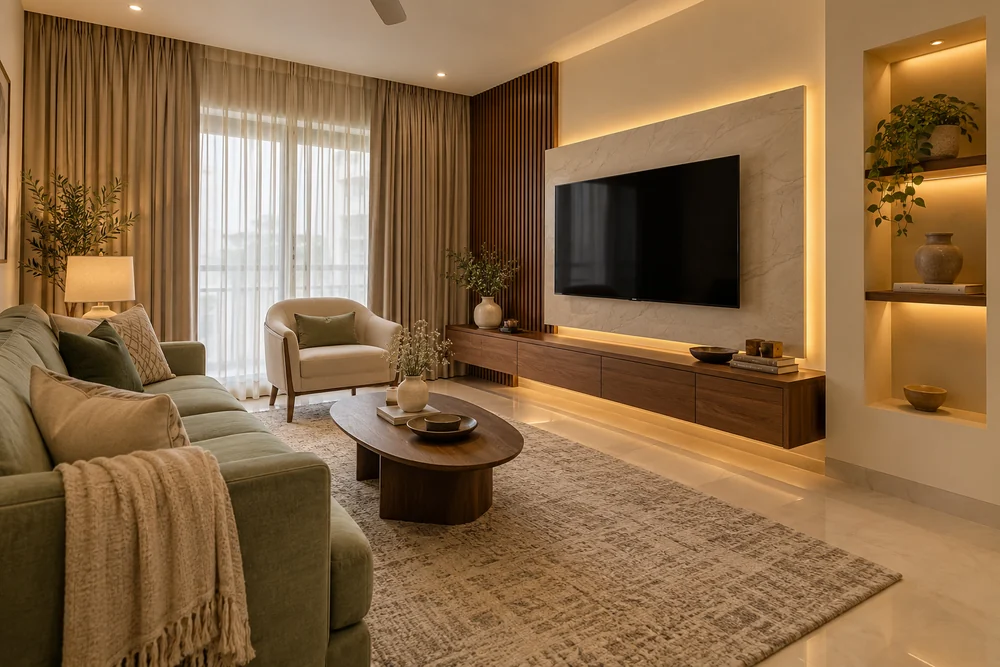
For a simple starting palette, choose one main wall colour, one dominant furniture colour and a smaller accent colour. For example, warm off-white walls, a muted green sofa and walnut furniture can form a calm base. You could bring in pattern through cushions or a rug instead of adding several competing finishes.
Light colours are an option, not a requirement. A darker sofa can work against pale walls, especially if the surrounding furniture is restrained. Check paint and fabric samples together in your own room during the day and evening; the same shade can look different under different lighting.
Avoid buying every accessory at once. Start with the large surfaces, then add smaller details after you can see how the room feels.
Keep Curtains and Window Areas Practical
Arrange curtains so they can open without catching on a sofa, side table or lamp. If you want privacy during the day, consider a sheer layer alongside a more opaque curtain for evenings. Check the actual fabric in your window, since a sheer curtain does not provide the same privacy in every lighting condition.
In a Karachi apartment, also consider balcony access, dust and how often the window is opened. Choose a curtain arrangement you can operate and clean without shifting heavy furniture. Keep air-conditioning outlets and ventilation paths clear when positioning tall pieces nearby.
Give Everyday Clutter a Home
List the things that regularly end up on the sofa or coffee table: remote controls, chargers, schoolbooks, toys and spare throws. Choose storage around those items. A useful cabinet should hold what you actually need, rather than simply filling an empty wall.
Closed storage can keep frequently used belongings out of sight, while a small open shelf can hold books or a few objects you enjoy seeing. Avoid filling every wall with shelving if it leaves you with more display surfaces to organise.
Choose storage around the items your family uses every day.
Let One Piece Do Two Jobs
A storage ottoman can hold throws and provide an extra seat if it is designed for seating. A nesting table can stay tucked away until guests arrive. Check the load rating and intended use before treating any storage box as a chair.
IKEA’s small living room guide also highlights furniture with more than one use and lightweight pieces that can be moved as needed. The useful principle is flexibility: a piece earns its place when it makes the room easier to use.
Choose a Table That Leaves Room to Walk
A large centre table can dominate a small lounge, even when the sofa fits well. Try a smaller round or oval table, a nesting pair or a side table beside the sofa. Test the arrangement with seated people, rather than measuring the empty floor alone.
Do not assume a round table always saves space. Its diameter and position still matter. If the room doubles as a play or exercise area, a lightweight table that can be moved may suit your routine better than a heavy fixed piece.
When browsing living room furniture options, compare one item at a time against your plan. You do not need every matching piece to make the room look complete.
Add Lighting Where You Need It
Think about the activities the room supports. General lighting helps you move around and see the room; a separate lamp can make reading or homework more convenient. Try a lamp beside the seat where it will actually be used, rather than placing it in an empty corner only for decoration.
In a compact space, check the lamp base and cable route. A tall floor lamp is not helpful if people must step around it to reach the door. A table lamp on an existing unit may be a simpler choice. Check for reflections on the television before settling on a position.
Avoid adding several different bulb colours without testing them together. Aim for lighting that feels comfortable for the room’s evening use and lets people see their tasks clearly.
Keep the TV Wall Simple
Before choosing wall panels or a large entertainment unit, identify what needs to be stored there. A television, router and a few accessories may only need a modest unit. Bulky decorative cabinets can reduce the floor space available for seating and movement.
Check the viewing position from your normal seat, and follow the television manufacturer’s guidance for ventilation and installation. For wall-mounted equipment or tall furniture, use suitable fittings and follow the manufacturer’s fixing instructions. Conceal cables only in ways that preserve access and safe use.
Refresh the Room in a Sensible Order
If you are planning small living room ideas on a budget, start with changes that cost little. Remove unused furniture, rearrange the seating and organise daily clutter before deciding what to buy. Live with the new arrangement for a few days so you can see which problems remain.
| Stage | What to do | Why it comes first |
|---|---|---|
| Measure and edit | Record dimensions and remove unused pieces | Shows how much space you actually have |
| Test the layout | Move existing seating and mark proposed pieces | Helps avoid buying unsuitable sizes |
| Solve the main problem | Address uncomfortable seating or missing storage | Directs spending towards daily usefulness |
| Adjust lighting and curtains | Improve the way you use the room | Lets you judge the setting before decorating |
| Add finishing details | Choose a few cushions, artwork or a rug | Makes it easier to buy pieces that work together |
Keep any delivery, assembly or installation charges in the budget. A room does not need to be finished in one shopping trip; replacing the least useful piece first can be a more manageable approach.
Frequently Asked Questions
How can I make a small living room feel more spacious?
Keep the main walking route clear, choose furniture that fits the room and reduce unnecessary pieces. Coordinate the larger colours and give everyday clutter a storage place. Start by rearranging what you own; paint or new furniture will not fix a layout that blocks doors and movement.
How should I arrange a 10-by-12-foot living room?
Begin with the door and window positions, then test a compact sofa, a shallow TV unit and one extra chair if space allows. Mark furniture footprints before buying. Room dimensions alone are not enough to choose a layout because entrances, cupboards and balcony access can change the available space.
Is an L-shaped sofa suitable for a small Pakistani lounge?
It can be suitable when the corner and chaise fit without blocking access. Compare its full footprint with a compact sofa and separate chair. Confirm the chaise direction before ordering, and leave room for curtains, doors and any furniture you need to open or move.
What wall colour works well in a small living room?
Warm white, soft beige and pale grey are possible starting points, but the right choice depends on the flooring, furniture and light. Test samples on your wall before painting the whole room. Choose a colour that works with existing finishes rather than relying on a universal “best” shade.
Where should the TV go in a narrow living room?
Try it opposite the main seating position on a wall that does not interfere with a doorway. Check glare from windows and lamps, and avoid placing the screen where viewers must keep turning their heads. Confirm viewing distance and installation requirements using the television manufacturer’s guidance.
Do I need a centre table in a small lounge?
No. A side table or nesting tables may provide enough space for cups and daily essentials while leaving more of the room usable. Choose according to how you sit and entertain. If you prefer a centre table, test its size and placement with people seated around it.
How can I add storage without making the room crowded?
Choose storage for a defined list of belongings and check its depth before buying. One useful closed cabinet may work better than several small units. Furniture with built-in storage can help, provided its doors or lids remain easy to open in the final arrangement.
How can I decorate a small living room on a low budget?
Rearrange existing furniture, remove unused pieces and organise surfaces first. Then address the biggest remaining problem, such as missing task lighting or inadequate storage. Add a few coordinated cushions or artwork later. Set a total budget that includes delivery and installation rather than only product prices.
How can a small lounge accommodate extra guests?
Keep everyday seating comfortable and use suitable movable chairs or seating-rated ottomans when guests visit. Nesting tables can provide temporary surfaces for drinks. Check where the extra pieces will be stored afterwards, and avoid blocking exits or essential routes to gain another seat.
Should I use a mirror in a small living room?
A mirror can reflect light and views, but its position matters more than its size alone. Test what it will reflect before installing it; a cluttered surface or bright glare may be distracting. Use suitable fixings and choose a position that works with your furniture and wall space.
Start With One Useful Change
Choose the part of the room that frustrates you most: a blocked route, an oversized table or belongings with nowhere to go. Solve that first and use the room for a few days before making the next change. A comfortable small living room comes together through decisions that suit daily life, not through adding every idea at once.