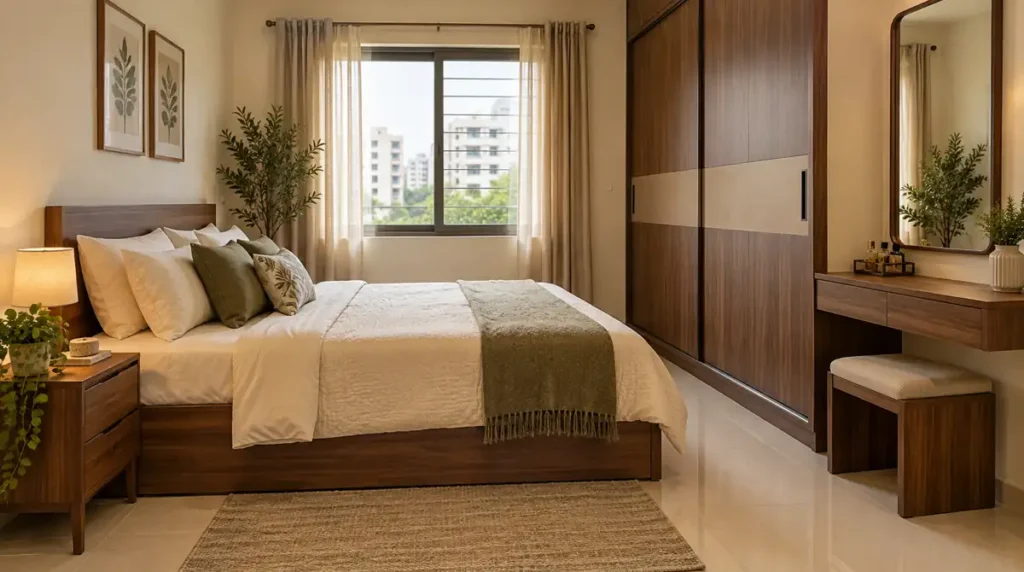
A bed can look perfectly sized in a showroom and feel far too large once it reaches your bedroom. The problem often becomes clear when you try to open the wardrobe, pull out a drawer or walk around the foot of the bed.
Good small bedroom furniture ideas in Pakistan need to solve these everyday problems. A room should give you somewhere comfortable to sleep, enough storage for your belongings and a clear route between the door, bed and wardrobe.
You do not need every piece from a matching bedroom set. You need the right pieces for your room, your routine and the people using it.
This guide explains how to measure your space, compare furniture and plan a bedroom that remains practical after the delivery team leaves.
Start With What Your Bedroom Needs to Do
Before looking at bed designs, write down how you use the room.
Does it belong to one person or a couple? Do you get dressed there? Do you need a laptop desk? Are winter quilts stored in the bedroom, or is there another cupboard available?
These answers affect what deserves space.
For example, someone who works in the bedroom may need a comfortable desk more than a separate dressing table. A couple with storage elsewhere may prefer a simple bed frame over a heavier storage bed.
Make two lists: essential furniture and optional furniture. Put sleeping space, everyday clothing storage and necessary access on the first list. Add decorative seating, extra cabinets and a large dresser only if the layout allows them.
When browsing Furniture Hub, keep this list beside you. It helps you compare pieces by their usefulness instead of choosing a complete room from one attractive photograph.
Measure the Room Before Choosing Furniture
Measure the clear wall-to-wall length and width. Then record anything that interrupts the space:
- The bedroom door and the direction it opens.
- Bathroom and balcony doors.
- Windows and curtain positions.
- Built-in cupboards, columns and wall projections.
- Electrical sockets and switches.
Draw a basic plan on paper. It does not need to look professional. Its purpose is to show where furniture can stand without blocking something you use.
Also measure existing furniture you intend to keep. A wardrobe that looks narrow from the front may extend much farther into the room than you expect.
Measure the whole bed, not only the mattress
The mattress size is not the bed’s total footprint. The frame, headboard and footboard can add extra width or length.
Ask the seller for both measurements in writing. Names such as “double,” “queen” and “king” are not enough to confirm that your mattress and frame will fit together.
A simple room-size example
Imagine a room that is 120 inches wide. A bed frame measuring 66 inches across leaves 54 inches before adding any other furniture.
If centred, that gives 27 inches on each side.
Now suppose a wardrobe extends 24 inches from one side wall. The same arrangement no longer works: almost all the space on that side disappears.
This is an illustrative calculation, not a recommended layout. It shows why choosing a bed first and finding space for the wardrobe later can create problems.
Mark furniture outlines on the floor with removable tape. Walk through the room and test where doors and drawers would open.
Choose a Bed That Leaves Useful Space Around It
The best beds for small bedrooms balance sleeping comfort with access.
A slim frame can help preserve floor space. A deep headboard or projecting footboard may occupy space without providing a larger sleeping surface.
Look closely at the corners. If the route to the bathroom passes the foot of the bed, a bulky frame may become an obstacle you walk around every night.
Bed height matters too. Sit on a bed with a similar mattress thickness before ordering. A very low design may look attractive but feel awkward for someone who finds standing up difficult.
For couples, consider whether both people can get in and out comfortably. Placing one side against a wall may work in some rooms, but it changes access and makes changing the bedding less convenient.
Compare the dimensions of different bed sets before deciding which design belongs on your shortlist.
Decide Whether You Actually Need a Storage Bed
A storage bed can hold spare bedding or seasonal clothing without adding another cabinet. However, the opening method needs to suit the room.
| Bed type | Useful when | Check before ordering |
|---|---|---|
| Bed with side drawers | You want frequent access | Space to pull drawers out and stand beside them |
| Lift-up storage bed | Side clearance is limited | Opening space, mechanism instructions and ease of use |
| Simple bed with space underneath | You prefer removable storage boxes | Actual clearance and cleaning access |
| Bed without storage | Storage is available elsewhere | Whether simpler construction suits your needs |
Do not judge storage capacity from the outside. Ask for the usable internal measurements. Frame supports and compartments can reduce the space available for large items.
For a lift-up bed, ask the seller to demonstrate the mechanism with a suitable mattress fitted. Confirm which mattress weights it supports and follow the operating instructions.
Keep items you use every morning somewhere easy to reach. A bed compartment may suit spare blankets better than clothing you need several times a day.
Plan the Wardrobe Around Your Clothes
A wardrobe should be designed around what goes inside it.
Count the items that need hanging space and separate them from folded clothes, bags and accessories. Long outfits need a different arrangement from shirts and folded trousers.
Before ordering, ask for an internal drawing showing shelves, hanging sections and drawers. A handsome exterior does not tell you whether the storage will work for your belongings.
Sliding doors or hinged doors?
Sliding doors can help where the space in front of the wardrobe is restricted. However, you usually access only part of the wardrobe at a time.
Hinged doors can provide a wider opening, but their swing must clear the bed and nearby furniture.
Neither option is automatically best. Test the arrangement against your room plan and consider who will use it.
How tall should the wardrobe be?
Upper storage can hold items used occasionally, while everyday clothing stays within comfortable reach.
Confirm installation requirements before choosing a unit close to ceiling height. The installer may need extra space to assemble or position it. Follow the supplied fixing instructions for furniture that requires wall anchoring.
IKEA’s wardrobe planning guidance also starts with clothing needs and the available space, rather than appearance alone. IKEA
Keep the Dressing Area Small but Useful
A small dressing table design should provide room for your daily essentials without becoming another large storage unit.
Start by deciding what you actually keep there. A few cosmetics, a hairbrush and a small organiser need less space than a full collection of products and styling tools.
Check the usable surface and drawer interiors rather than judging by the mirror size.
If you also need a desk, one surface may serve both purposes. Test its height, legroom and depth for the way you intend to use it. A dressing console that holds a mirror may still be uncomfortable for several hours of laptop work.
Choose seating that fits underneath when not in use. Remember to allow space to pull it out and sit down.
For a wall-mounted unit, confirm that the wall and fixings can support the intended load. Do not assume a decorative floating shelf can safely replace a properly installed desk.
Use Bedside Furniture According to Your Routine
Think about what you place beside the bed each night.
If it is only a phone, glasses and a glass of water, a narrow surface may be enough. If you keep books, medicines or charging equipment there, a drawer may be more useful.
Measure the height against the finished mattress. A bedside surface that is much lower or higher can feel awkward to reach.
Two matching bedside tables are optional. In an uneven room, a narrow cabinet on one side and a smaller shelf on the other may work better.
Keep charging wires out of walking routes. Also check that furniture does not cover the socket you need to use.
Choose Materials by Specification, Not a Label Alone
Descriptions such as “wooden,” “premium” and “solid” do not explain the construction of every part.
Ask which material is used for the frame, visible panels, drawer bottoms and back panels. A piece may combine several materials.
For wooden bedroom furniture, request clear information about the finish and care requirements. Inspect a sample where possible, especially if you are matching existing furniture.
Open and close drawers. Look at how panels join. Check whether handles are comfortable and whether exposed edges feel properly finished.
A material name alone does not guarantee good construction. Equally, a photograph cannot show the quality of joints, fittings or hidden supports.
If a wall has damp patches, address the cause before placing furniture against it. New furniture should not be used to hide an unresolved moisture problem.
Make the Layout Comfortable Before Adding Decoration
Begin with the bed and wardrobe. Then test the dressing area, bedside storage and any desk.
Follow your usual routine through the proposed layout:
- Enter carrying a laundry basket.
- Open the wardrobe and take out clothing.
- Sit down to get dressed.
- Walk to the bathroom.
- Change the bedsheet.
- Reach the window and curtains.
These small tests reveal problems that a front-facing room photograph may hide.
Avoid adding a chair simply because an empty corner exists. The space may be needed for opening a cupboard or moving around the room.
Once the layout works, choose finishes, bedding and lighting. A consistent colour scheme can make the arrangement feel calmer, but it cannot fix blocked access.
Buy in Stages if the Budget Is Limited
Buying fewer pieces at first lets you understand the room before filling it.
A practical order is:
- Bed and a suitable mattress.
- Essential clothing storage.
- Bedside surface.
- Dressing or work area, if needed.
- Optional furniture and decoration.
Keep a separate amount for delivery, assembly and any installation work. These costs should be clear before you compare quotations.
When checking bedroom furniture prices in Pakistan, compare the same specifications. One quotation may include a mattress or bedside tables, while another covers only the frame.
A lower total does not tell you much until you know what is included.
Compare Custom and Ready-Made Furniture Carefully
Ready-made furniture lets you assess a finished piece, although the displayed model may differ from the exact size or finish being supplied.
Custom bedroom furniture can help with an awkward wall or specific storage requirements. It also requires more decisions before production begins.
For a custom order, approve a written specification covering:
- Overall dimensions and mattress size.
- Materials for the main components.
- Finish or fabric reference.
- Internal storage arrangement.
- Handles and hardware.
- Items included in the price.
- Delivery and assembly arrangements.
Ask how later changes affect the cost and completion date. Confirm the seller’s cancellation and return terms before paying an advance.
Keep the approved drawing and quotation together. They provide a clearer reference than a collection of messages and inspiration pictures.
Check How the Furniture Will Reach the Bedroom
Furniture can fit the bedroom and still fail to pass through the staircase.
Measure the entrance, lift opening, narrow passageways and turns along the delivery route. Ask for the size of the largest component that will arrive.
A tall headboard or assembled wardrobe may be harder to move than several smaller sections.
Tell the seller about stairs, restricted access and the floor number in advance. Confirm whether assembly happens inside the room and whether additional handling costs apply.
Review the payment and delivery policy before finalising the order, then have any order-specific arrangements recorded in writing.
Frequently Asked Questions
What furniture is essential for a small bedroom?
Start with a suitable bed, necessary clothing storage and somewhere for bedside essentials. Add a desk or dressing table according to your routine and available space.
Can a king-size bed fit in a small bedroom?
Possibly, but the room dimensions alone do not answer the question. Check the complete frame, wardrobe depth, door positions and remaining walking space.
Is a storage bed always better for a small room?
No. It is useful when you need the storage and can operate it comfortably. If you already have enough cupboard space, a simpler bed may be a better choice.
Should all bedroom furniture match?
It does not need to come from one set. Coordinated finishes can look balanced, while separately selected pieces may fit the room more effectively.
How do I choose an affordable bedroom set?
Compare written specifications and included items. Prioritise the pieces you use daily, and avoid paying for extra furniture that makes the room harder to use.
What should I send a furniture maker before requesting a quote?
Send room measurements, door and window positions, your mattress dimensions and a list of required pieces. Include reference pictures, but explain which features you want from each.
The most useful bedroom is one you can live in comfortably every day. Measure first, test the arrangement and choose furniture that earns its place in the room.