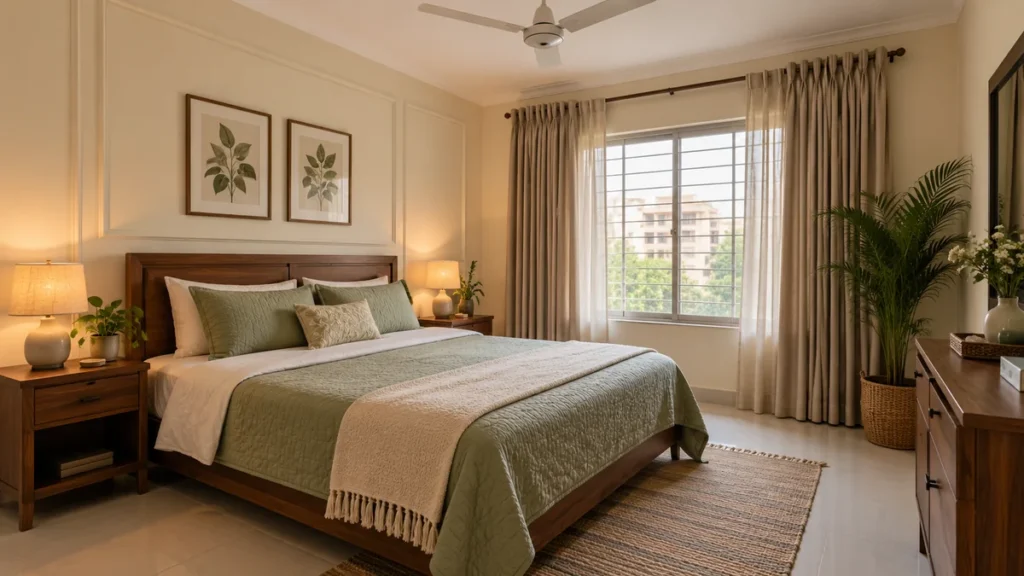
A bedroom can feel tired even when the furniture is perfectly usable. The curtains may no longer work with the bedding, the wall behind the bed might look unfinished, or the dressing table may have become a place for everything that has no home. You do not always need a new bedroom set to put these things right.
These budget-friendly bedroom decor ideas start with the room you already have. Whether you are exploring Furniture Hub for one useful addition or planning to refresh existing furniture, focus on changes you will notice every day: a calmer layout, coordinated bedding, practical lighting and a wall that feels thoughtfully finished.
How Can You Decorate a Bedroom on a Budget?
Begin by clearing unused items, checking the furniture layout and choosing a simple colour palette. Refresh bedding or curtains where needed, then give the bed wall one clear decorative feature. Spend on the room’s biggest practical problem before buying accessories, and include fitting or delivery charges in your budget.
A useful bedroom makeover should make the space easier to live in. If a beautiful new chair blocks the wardrobe, or a pile of decorative cushions has nowhere to go at night, the room still needs a better plan.
Decide What to Keep Before Buying Anything
Look at your bed, wardrobe, bedside tables and dresser separately. What pieces are comfortable and useful? Which need a small repair? Which take up space without doing much? Keeping furniture that works gives you more room in the budget for changes that matter.
Take a photograph of the room before shopping. It can help you notice competing colors, an overcrowded corner or a curtain that sits awkwardly behind a table. Write down the two things you most want to improve rather than starting with a long list of new products.
Make a Keep, Improve and Replace List
| Decision | Example | What to check first |
|---|---|---|
| Keep | A comfortable bed in good condition | Whether its position suits the room |
| Improve | A useful dresser with loose handles | Repair cost and suitable replacement fittings |
| Refresh | Plain bedding that still fits well | Whether a different throw or cushion cover is enough |
| Replace | A damaged or unsuitable furniture piece | Dimensions, function and full replacement cost |
| Remove | An unused chair covered in clothes | Whether the room works better without it |
Ask about the existing finish before repainting furniture. Solid timber, veneer and laminate may need different preparation and products. A cheap cosmetic project can become expensive if the finish is damaged in the process.
Make the Layout Comfortable First
Measure the room, including doors, windows and wardrobe openings. Check whether drawers can slide out fully and whether you can reach the bed without stepping around furniture. Mark the footprint of any proposed new piece with removable tape before ordering.
In a small Pakistani bedroom, a bulky headboard or deep foot board can occupy useful space. If replacement is necessary, compare the full external dimensions of different bed sets, not just the mattress size. Confirm exactly which items come with the set and whether they all fit your room.
You may not need two large bedside tables. A narrower table on one side could suit an awkward room better, provided it offers the surface or storage you use. Let daily routines guide the arrangement rather than trying to copy a perfectly symmetrical photograph.
Build a Colour Palette Around Existing Furniture
Use the largest things you intend to keep as your starting point. A dark wooden bed, cream flooring or patterned curtains already influence the room. Pick a wall colour and bedding that work with them instead of introducing a completely separate colour scheme.
One simple approach is to use a neutral base, a main accent colour and a smaller supporting accent. Ivory, muted green and walnut can work together; cream, terracotta and a little olive create a warmer alternative. These are examples to test, not combinations that suit every room automatically.
Check samples beside the furniture in daylight and under evening lights. If a colour looks wrong, changing a sample is much easier than repainting the entire room.
Give the Bed Wall One Clear Idea
The wall behind the bed is a useful place to concentrate your decorating effort. It can look finished with paint and artwork alone. Choose the treatment according to the wall’s condition, the size of the headboard and the amount you want to spend.
Try Paint Before Expensive Paneling
A single accent wall or a two-tone paint treatment can introduce interest without adding deep wall features. Use tape to test where the colour boundary should sit in relation to the headboard and artwork. Get a quote that includes surface preparation, materials and labour if someone else is doing the work.
Do not cover a damp or peeling wall with decorative panels to hide the problem. Investigate and resolve the cause first, then choose a suitable finish. If the wall is sound, a simple painted area may achieve the change you wanted without a larger installation.
Use Mouldings or Artwork With Restraint
Simple rectangular mouldings can frame the headboard area, but cutting, fitting and painting add to the cost. Compare that total with a pair of framed prints or one larger artwork. A small room does not need mouldings, wallpaper, slats and a gallery wall all competing behind the bed.
Plan the spacing on paper and check the arrangement from the doorway. Fix frames securely using fittings suited to the wall and their weight. In a rented home, confirm permission before painting or drilling; even removable adhesives can affect some finishes.
A two-tone wall and coordinated artwork can give existing bedroom furniture a fresh setting.
Refresh Bedding Without Buying Too Many Layers
The bed takes up a large part of the room, so bedding has a strong visual effect. Start with a well-fitting sheet and a bedspread or cover that works with your palette. Add a throw or a small number of cushion covers only if you like using them.
IKEA’s bedroom textile styling ideas show how changing textiles can refresh the same bedroom setting. You can use that principle with what you own: try a different arrangement or a new cover before replacing the furniture.
Choose bedding for your routine and the conditions in your room. Heavy decorative layers may be inconvenient in warm weather, especially if you remove them every night. Check the fabric composition, care label and washing requirements rather than buying only for the photograph.
Choose Curtains for Privacy and Daily Use
Curtains need to do more than match the bedspread. Think about outside light, privacy and how easily the window opens. A sheer layer can soften daylight, while a more opaque curtain may be useful when you want greater privacy or less light. Check the actual fabric rather than assuming every lining performs the same way.
Measure the width and intended drop before placing an order. Include the rod, brackets, lining, stitching and installation in the quotation. In a compact bedroom, make sure the curtain can open without catching on a dresser or bedside table.
For a lower-cost refresh, first check whether your existing curtains can work with a different bedding colour. You may not need to change both at once.
Add Useful Lighting Around the Bed
A ceiling light may illuminate the room but still leave your reading spot or dressing area poorly lit. Identify where you need an additional light before buying a decorative fitting. A table lamp can be a practical change when you already have a suitable surface and socket nearby.
Check the lamp’s height, shade and controls from your usual position in bed. Keep cables out of walking routes and away from places where furniture could trap them. For new wiring or fixed electrical fittings, use a qualified electrician.
There is no need to copy elaborate ceiling lighting for a budget bedroom makeover. Coordinating the lamps you use can be enough to make the evening setting feel more considered.
Organise the Dressing Area Before Styling It
Empty the dressing table and group the things you use daily. Keep those within reach and put occasional items into drawers or a suitable organiser. Leave a usable surface for getting ready rather than covering it with decorative objects.
If you add a mirror, test the position before fixing it. Check what it reflects, whether you can see comfortably and whether a lamp creates distracting glare. Follow the fixing instructions for mirrors and tall furniture, particularly where children may use the room.
When exploring furniture for your home, start with the missing function: a shallow drawer, a smaller bedside surface or better clothing storage. A clearly defined need makes it easier to avoid buying another attractive piece that does not fit.
Add Personal Details Without Filling Every Corner
A framed photograph, a favourite print or a textile you already own can make the room feel personal. Repeat a colour from your bedding in one or two accessories to connect the details. You do not need a matching item on every surface.
If you use a rug, check its size, cleaning needs and position around doors and furniture. Make sure it lies securely rather than curling into a walking route. Plants are optional too; choose a position and variety you can realistically care for instead of buying them only to fill empty space.
Spend in Stages and Keep the Total Visible
Bedroom decoration costs depend on room size, materials, labour and how much you already own. Rather than relying on a single budget figure, compare written quotes for the same scope. Keep a small allowance for fitting materials or other confirmed extras before spending on finishing touches.
| Stage | First action | Extra costs to ask about |
|---|---|---|
| Layout and organisation | Rearrange usable pieces and sort belongings | Help moving heavy furniture, if needed |
| Wall refresh | Test paint or plan artwork | Preparation, fitting, labour and fixings |
| Bedding and curtains | Buy only the pieces that need changing | Lining, stitching, rods and installation |
| Lighting | Improve the reading or dressing area | Bulbs, fittings and any electrical work |
| Furniture replacement | Replace a piece that no longer works | Delivery, assembly and removal arrangements |
Finish one stage before starting another. You may find that organised surfaces, refreshed bedding and a painted wall provide enough change, leaving a larger furniture purchase for later.
Frequently Asked Questions
How can I decorate my bedroom with very little money?
Start by removing unused items, rearranging the furniture and coordinating bedding you already own. Choose one visible change, such as new cushion covers or a small artwork arrangement. Address practical problems first, and avoid buying several decorative pieces before deciding on a colour palette.
What should I change first in an old-looking bedroom?
Identify what is making the room feel tired. If furniture is usable, start with clutter, worn textiles or an unfinished wall. If something is damaged or uncomfortable, prioritise repair or replacement. The right first purchase solves a real problem rather than simply adding another accessory.
How can I decorate the wall behind my bed cheaply?
Consider an accent paint colour, a two-tone treatment or a small group of framed prints. Compare the complete costs, including preparation and fixing. Choose one main feature and check its proportions against the headboard. Deal with dampness or damaged surfaces before applying a decorative finish.
Which colors work with dark wooden bedroom furniture?
Warm ivory, soft beige, muted green and some pale greys can be starting points, depending on the wood tone and lighting. Test samples alongside the actual furniture and flooring. Use a coordinated bedding colour to connect the room instead of choosing paint in isolation.
How can I make a small bedroom look more organised?
Keep the route to the bed and wardrobe clear, remove furniture you do not use and give daily items a storage place. Choose fewer decorations for exposed surfaces. A tidy room still needs convenient access, so check that drawers and cupboard doors open fully in the final layout.
Do I need matching bedside tables and a dresser?
No. Pieces can work together through similar colors, materials or proportions without being identical. Check that each item fits and serves its purpose. In an awkward room, a smaller bedside table may be more useful than a matching large one that blocks movement.
Are wall mouldings a budget-friendly bedroom idea?
They can be, but the full price depends on material, wall preparation, fitting and painting. Request a complete quotation and compare it with simpler paint or artwork options. Keep the design restrained if you want to limit labour and avoid overwhelming a small bedroom.
How can I improve a rented bedroom without major changes?
Focus on bedding, curtains where permitted, lamps and freestanding organisers. Rearrange your own furniture if it is practical to do so. Ask the landlord before painting, drilling or changing fittings, and check surface compatibility before using adhesive hooks or removable decorative products.
What should I check before buying a bedroom set?
Measure the full furniture dimensions, doorways and available room space. Confirm the mattress size, included pieces, materials and storage access. Ask for the delivered price and written order terms. A set that looks coordinated still needs to allow comfortable movement around the room.
How much should I budget for bedroom decoration in Pakistan?
There is no reliable single amount for every room. List the specific changes you want and collect current quotes for materials, labour, delivery and installation. Separate essential repairs from optional decor, then fund the most useful changes first. Keep the scope consistent when comparing prices.
Start With the Change You Will Use Every Day
Choose one improvement that makes your routine easier: a clearer bedside surface, curtains that work properly or a bed wall you enjoy seeing. Build the rest of the room around that decision. A thoughtful bedroom can take shape gradually, using a mix of existing furniture and carefully chosen additions.