
A cupboard door starts rubbing against its frame. A bedside table develops a cloudy mark. The back of a cabinet smells damp even though the front looks clean. Before reaching for furniture polish, check where the moisture is coming from. A spill, a leaking wall and damp room air need different responses.
If you want to protect wooden furniture from moisture, start with the room and the way the furniture is used. Whether your pieces came from Furniture Hub or have been in the family for years, a simple inspection routine can help you spot problems before deciding what to clean, move or repair.
How Do You Protect Wooden Furniture from Moisture?
Keep furniture away from leaks and damp surfaces, remove spills promptly and follow the care instructions for its finish. Check hidden areas as well as visible surfaces. If the room stays damp, investigate the source and assess indoor humidity instead of relying on polish to solve the problem.
For wooden furniture care in Karachi, it helps to keep two questions separate: is liquid water reaching the piece, or is the surrounding air persistently damp? Your answer determines the next useful step.
Understand What Humidity Does to Wood
Wood takes up moisture from humid air and releases it as the air becomes drier. This movement can affect its shape and finish. The Canadian Conservation Institute explains this process in its wooden furniture care guidance.
A sticking drawer is worth investigating, but it does not prove that humidity is the cause. Loose hardware, overloading or damage may also affect movement. Note what changed, when you first noticed it and whether other pieces in the same room have similar problems.
Find the Moisture Source Before Treating the Furniture
Start with a short walk around the room. Look beside windows, below air-conditioning units and along the wall behind large furniture. Check whether a wet floor mop regularly touches cabinet bases or whether a plant pot leaves moisture underneath it.
Take photos of any marks and record their location. For example, damage confined to the bottom of a wardrobe calls for a different inspection from marks directly beneath a window. Share those details with the person assessing the leak or furniture; they are more useful than simply saying the room feels humid.
| What you notice | What to check | Sensible first action |
|---|---|---|
| A mark below a glass or vase | Recent spills and the condition of the surface | Remove the item and gently dry any remaining liquid |
| Dampness behind a wardrobe | The wall, nearby pipework and window area | Arrange an inspection of the suspected moisture source |
| Damage around cabinet feet | Wet cleaning, floor leaks or previous standing water | Stop repeated contact with water |
| A sticking door or drawer | Hinges, runners, contents and room conditions | Avoid forcing it and document the problem |
| A lifted edge or bubbling surface | The material, finish and history of wetting | Ask the maker or repairer to assess it |
These observations are clues, not a diagnosis. When you are unsure, avoid experimenting with several cleaners before someone has identified the material and finish.
Keep Furniture Clear of Damp Walls and Wet Floors
If the wall behind a bed or cabinet is damp, moving the furniture is only a temporary protective step. The wall still needs attention. Ask a suitable tradesperson to investigate the source before placing the piece back or covering the area with decorative panels.
Leave enough access to inspect and clean behind furniture, following its installation requirements. Do not remove anti-tip fixings or change a fitted unit’s supports to create a gap. Heavy wardrobes and wall-fixed cabinets may need an installer to move them safely.
For everyday monsoon furniture care, check the floor after cleaning. Keep excess mop water away from wooden feet and cabinet bases, and do not leave a wet cloth resting against them. A small change in cleaning habits is easier than repeatedly repairing the same edge.
Use a Cleaning Method That Suits the Finish
Cleaning wooden furniture does not mean washing it. Look for the maker’s instructions before using water or a cleaning product. A painted cabinet, an oiled table and an older decorative finish may require different treatment.
Some modern finished furniture permits a lightly damp cloth followed by a dry one. For example, IKEA gives this approach for its LISABO ash-veneer table. That is product-specific guidance, not permission to use the same cleaner on every wooden surface.
Keep the Cleaning Routine Simple
- Remove loose dust with a clean, soft cloth.
- Use only the cleaner and method allowed for the piece.
- Apply the recommended amount; avoid soaking seams or edges.
- Dry the surface as directed and put accessories back only when it is dry.
If the finish becomes sticky, changes color or lifts onto the cloth, stop and ask for advice. Keep the product label and tell the repairer what you used. Do not keep rubbing a patch simply because the rest of the surface looks fine.
Protect Tables from Everyday Spills
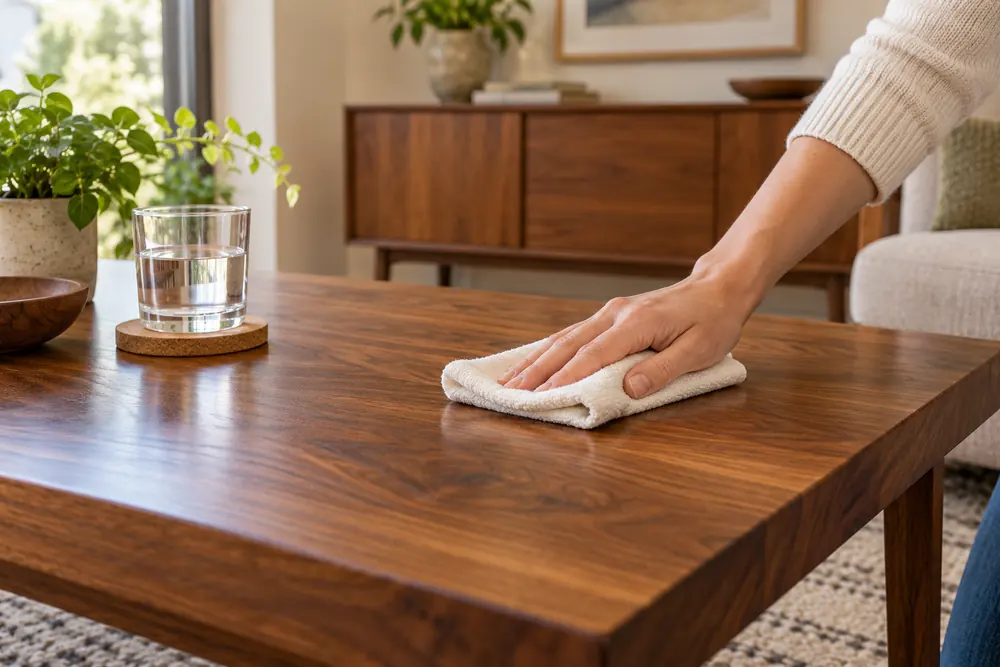
Use coasters under drinks and check underneath trays and decorative objects when cleaning. The Canadian Conservation Institute recommends preventing accidental water contact, including from drinks and plant pots. Put indoor plants on a suitable separate stand where possible, and check for leakage after watering.
If water spills, lift away the wet item and blot up the liquid with a soft cloth. Do not start scrubbing the finish. If a mark remains once the surface is dry, photograph it and ask which treatment is suitable. Avoid trying a hot iron, harsh abrasive or homemade mixture on an unidentified finish.
This is especially useful for bedside tables, where a glass may sit unnoticed overnight. Keep a coaster within easy reach so protecting the surface becomes part of normal use.
Check Room Humidity Rather Than Guessing
A hygrometer measures relative humidity and can help you compare room conditions over time. Follow its placement instructions and record readings at similar times. One reading beside an open window or directly under an air-conditioning outlet may not represent the whole room.
Do not assume that opening every window will always dry the room. The US Department of Energy’s guidance on natural ventilation notes the importance of drawing in suitably cool, dry air. Outdoor conditions matter, particularly when you are trying to manage indoor moisture.
If dampness persists after obvious leaks are addressed, ask an appropriate professional whether ventilation changes or dehumidification are needed. Cooling and moisture control are related, but a cooler room is not proof that its humidity is controlled. Choose equipment around measured conditions and maintenance needs, not a furniture-care advertisement alone.
Give Wardrobes and Bed Storage Extra Attention
Hidden storage deserves a place in your wooden furniture maintenance routine. Check the back panel, lower corners and the area beneath stored items. Avoid packing damp clothing or recently washed bedding away before it is fully dry.
Keep enough space to inspect the interior without emptying the entire unit every time. If you notice a persistent smell, do not simply add fragrance and close the door. Check the contents and surrounding wall, then arrange further assessment if you cannot find the source.
When comparing bed sets for your bedroom, ask how any built-in storage should be cleaned and accessed. Request care instructions for the bed frame, drawer panels and headboard rather than assuming the whole set uses one material.
Understand the Limits of Moisture-Resistant MDF
Furniture described as wooden may combine solid timber, veneer and manufactured boards. Ask which material is used in each part, especially the back panels, drawer bases and areas close to the floor.
Moisture-resistant MDF should not be treated as a promise that ordinary furniture can stand in water. MEDITE SMARTPLY explains that its moisture-resistant MDF is designed to cope better with humid conditions but is not intended for prolonged water exposure. The exact board specification and the finished item’s construction still matter.
For MDF furniture care, keep the supplier’s instructions and report swollen edges or surface changes early. Do not sand, seal or repaint a damaged panel before checking whether it needs repair or replacement. A cosmetic coating cannot establish that the underlying piece is sound.
Know When to Stop Home Treatment
Ask a furniture repairer to assess loose joints, lifted veneer, substantial swelling or a finish that is breaking down. If you suspect mould, avoid dry-brushing it through the room and seek suitable professional advice, especially when the problem is widespread or keeps returning. This guide covers prevention and inspection, not mould remediation.
For floodwater or sewage exposure, do not treat the piece as an ordinary clean-water spill. It needs a separate professional assessment. Also avoid loading a cabinet or sitting on a chair if water damage may have weakened it.
Before purchasing replacement furniture for your home, resolve the room’s moisture problem and explain the intended location to the seller. Otherwise, a new piece may face the same conditions as the old one.
A Simple Furniture Care Schedule
Use this as a suggested household checklist and adjust it to the maker’s instructions. There is no need to buy a new product for every task.
| When | What to check | Useful record |
|---|---|---|
| After a spill | Surface, seams and the area underneath | A photo if a mark remains |
| During routine cleaning | Coasters, table edges and furniture feet | Note repeated wet contact |
| After rain near a suspect window | Window surround, wall and nearby furniture | Date and location of any new dampness |
| During a regular storage clear-out | Cabinet backs, corners and stored textiles | Photos of changes or persistent smells |
| Before moving or ordering furniture | Wall condition, access and installation needs | Measurements and care instructions |
Frequently Asked Questions
How can I protect wooden furniture from moisture in Karachi?
Check for leaks and damp walls, limit direct water contact and follow the furniture’s cleaning instructions. Inspect hidden areas as well as tabletops. If the room stays damp, measure its humidity and investigate the cause before buying polish or replacing the furniture.
Does furniture polish prevent moisture damage?
Polish is not a substitute for controlling leaks or damp room conditions. Its suitability depends on the existing finish. Ask the maker which product, if any, is appropriate, and avoid repeated applications intended to hide a developing problem.
Can I clean wooden furniture with a damp cloth?
Only if the care instructions allow it. Some modern finished furniture permits a lightly damp cloth followed by drying, while other surfaces need a different method. Check the instructions first and avoid soaking joints, edges or an unidentified finish.
Why does my wardrobe smell damp?
A persistent smell calls for an inspection of the stored items, cabinet interior and wall behind it. Check whether clothes were put away damp or whether nearby surfaces show moisture. Smell alone cannot identify the cause, so seek assessment if the source remains unclear.
Is moisture-resistant MDF waterproof?
Do not treat the term as a guarantee against prolonged wetting. Check the exact board grade and furniture specification. MEDITE’s moisture-resistant MDF guidance distinguishes humid conditions from prolonged water exposure, so ordinary care around spills and damp surfaces still matters.
Should I open windows to reduce indoor humidity?
It depends on outdoor conditions and the room. Ventilation with drier air can help, but bringing in humid air may not achieve the result you want. Use measurements and appropriate ventilation advice rather than assuming an open window is always the answer.
What should I do if water spills on a wooden table?
Remove the wet item and gently blot up the liquid with a soft cloth. Follow the surface’s care instructions. If a mark remains, get finish-specific advice rather than immediately trying heat, sanding or a household cleaning mixture.
Can swollen furniture be repaired?
It depends on the material, the extent of damage and whether joints or fixings are affected. Send clear photos and the product details to a qualified repairer or the maker. Do not assume that drying will restore the original size, strength or appearance.
How should I care for furniture during the monsoon?
Pay extra attention to suspect windows, damp walls and furniture close to wet floors. Keep stored textiles dry and check behind larger pieces when it is safe to do so. Record any recurring problem so the person investigating it can see where and when it appears.
How do I know when to call a professional?
Get help for ongoing leaks, recurring suspected mould, substantial swelling, loose joints or damaged veneer. Floodwater exposure also needs separate assessment. Avoid using furniture that may have lost strength, and share photographs, material details and the history of the problem.
Start With the Source, Then Care for the Surface
Choose one piece to inspect today, especially if it stands near a window, an external wall or an area that gets wet during cleaning. Check its care instructions and note any changes. Protecting wooden furniture from moisture is easier when you know what the room and the furniture actually need.